
Equitable residency call schedules solved by math
Thrawn's managed service uses mathematical optimization to deliver equitable call schedules that balance resident preferences, ACGME duty hour rules, and fairness automatically.
Why Fair Call Scheduling Stays Broken
Unequal Night and Weekend Burdens
Without mathematical precision, some residents absorb disproportionate nights and holidays while others get favorable assignments, breeding resentment and burnout.
Compliance Gaps Found Too Late
Rule-based tools detect ACGME duty hour violations after the schedule is built, forcing manual rebuilds and leaving programs exposed during accreditation reviews.
One Change Breaks Everything
A single swap request or absence cascades through call, block, and clinic schedules, triggering hours of manual patching to restore coverage and fairness.
Mathematically Equitable Call Schedules Delivered
Thrawn's optimization engine takes your program's constraints — resident preferences, ACGME duty hour rules, vacation requests, and coverage requirements — and produces a finished, equitable call schedule. No manual tweaking. No fairness disputes. Chiefs review, not build.
Built for Equitable Residency Scheduling
Five capabilities working together to deliver call schedules that are fair, compliant, and finished without manual intervention.
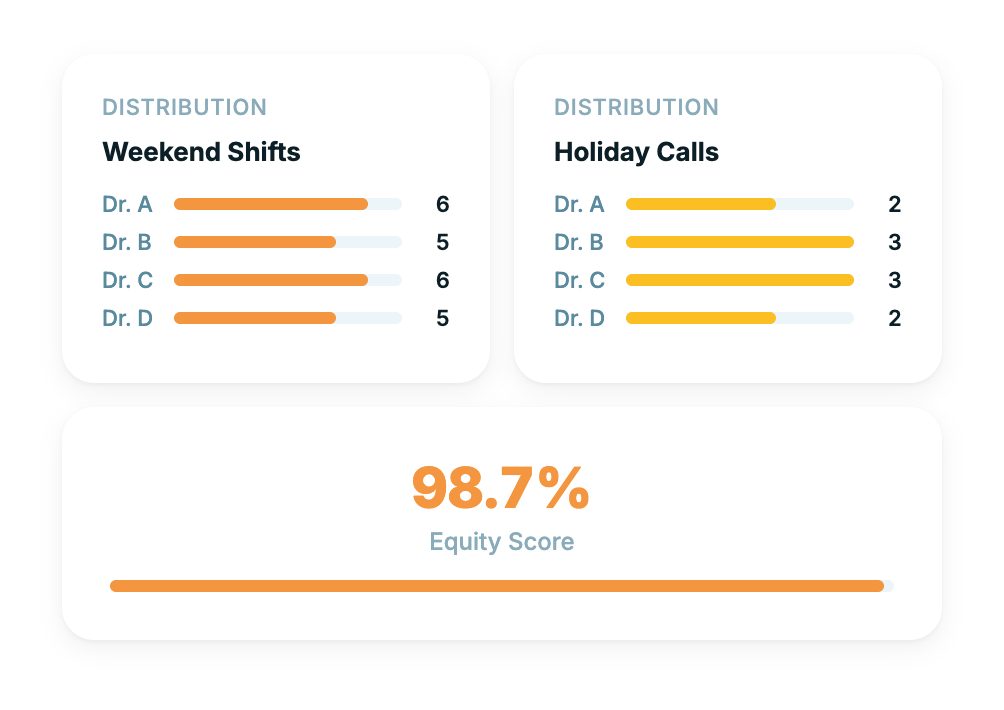
Fairness Engine
Mathematically Equitable Call Assignment Distribution
Nights, weekends, and holiday call distributed with mathematical precision across every resident. Removes gut-feel bias and the perception of favoritism that fuels scheduling complaints in residency programs.
- Balanced night and weekend rotation
- Holiday and holiday-adjacent equity
- Measurably fair distribution
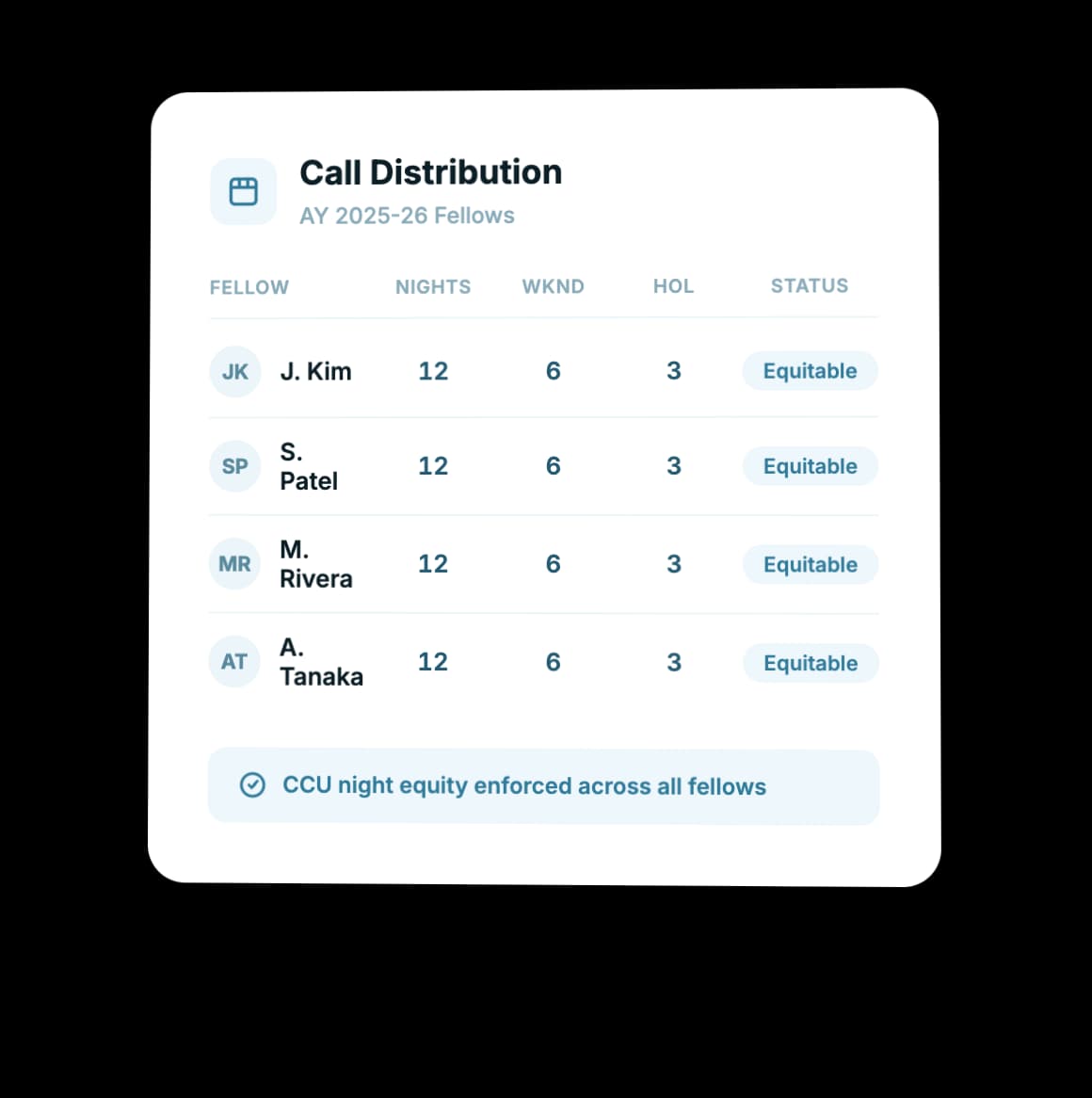
Call Optimization
Equitable Call Scheduling with Full Coverage
On-call assignments optimized for fairness and coverage simultaneously. Night float, jeopardy, and backup slots are filled equitably without overburdening any single resident or leaving gaps in coverage.
- Night float and jeopardy balancing
- Weekend and backup coverage equity
- No manual conflict resolution needed
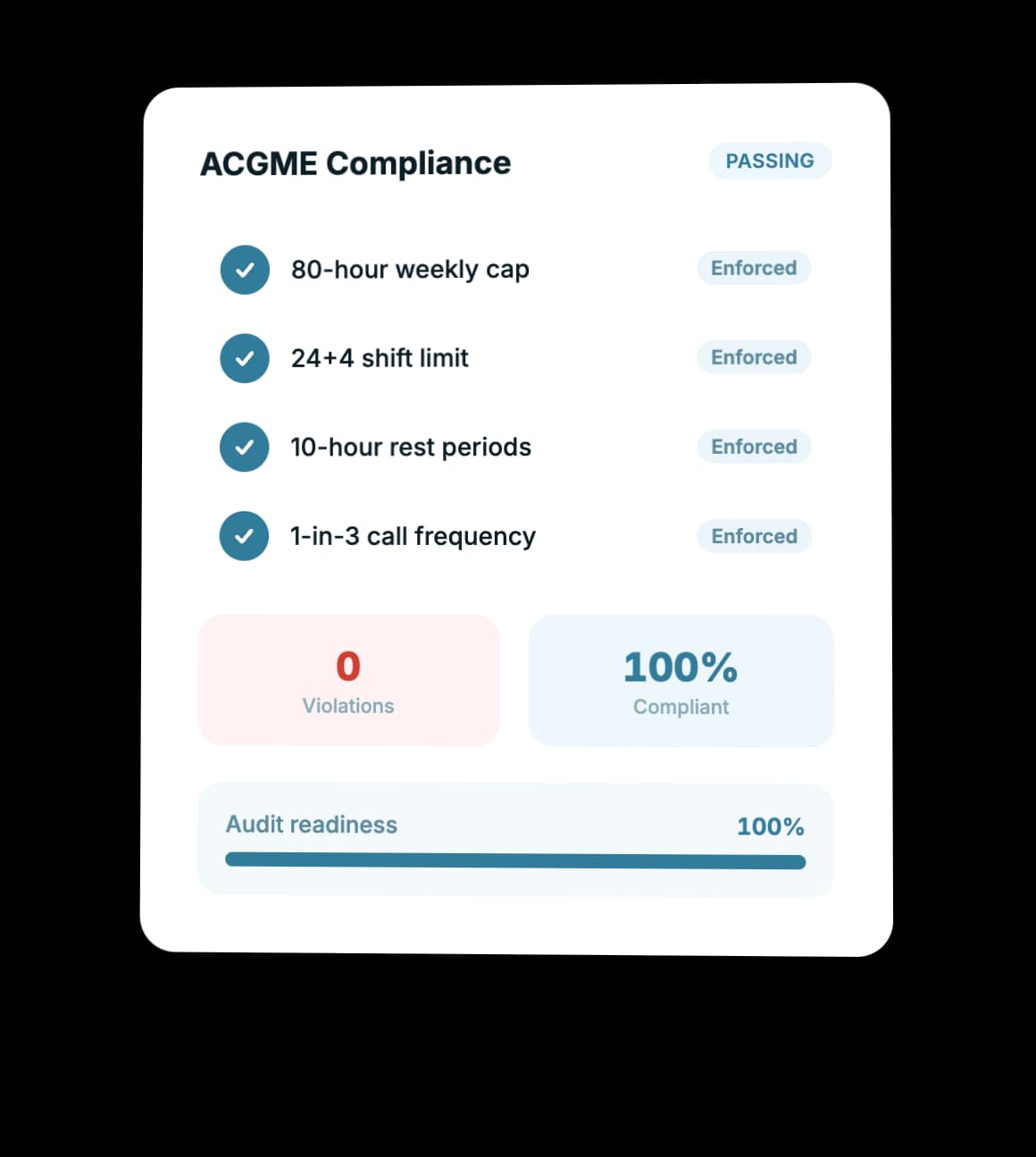
Compliance
ACGME Duty Hour Violations Prevented at Generation
Every equitable call schedule Thrawn produces automatically satisfies ACGME duty hour rules. Violations are prevented before the schedule is generated, not flagged after residents are already scheduled.
- Violation prevention not detection
- 80-hour weekly limit enforced
- Accreditation audit readiness built in
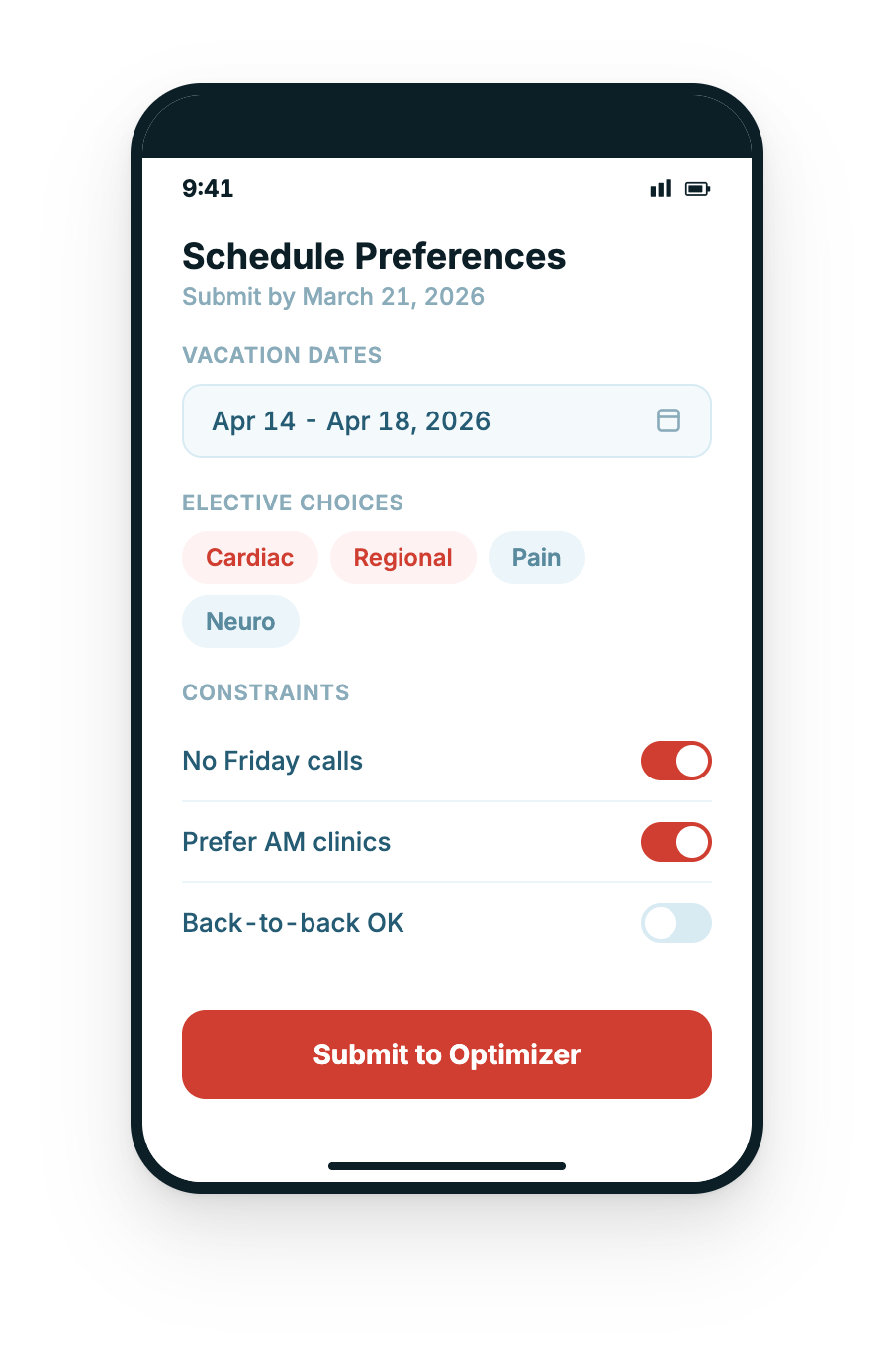
Resident Input
Resident Preferences Factored Into Every Call Schedule
Vacation requests, elective preferences, and individual scheduling constraints are inputs to the mathematical optimization. Residents get meaningful input into their call schedule without creating reconciliation work for chiefs.
- Vacation and elective request handling
- Individual constraint accommodation
- No manual preference spreadsheets
Cross-Schedule
Call and Block Schedules Optimized Together
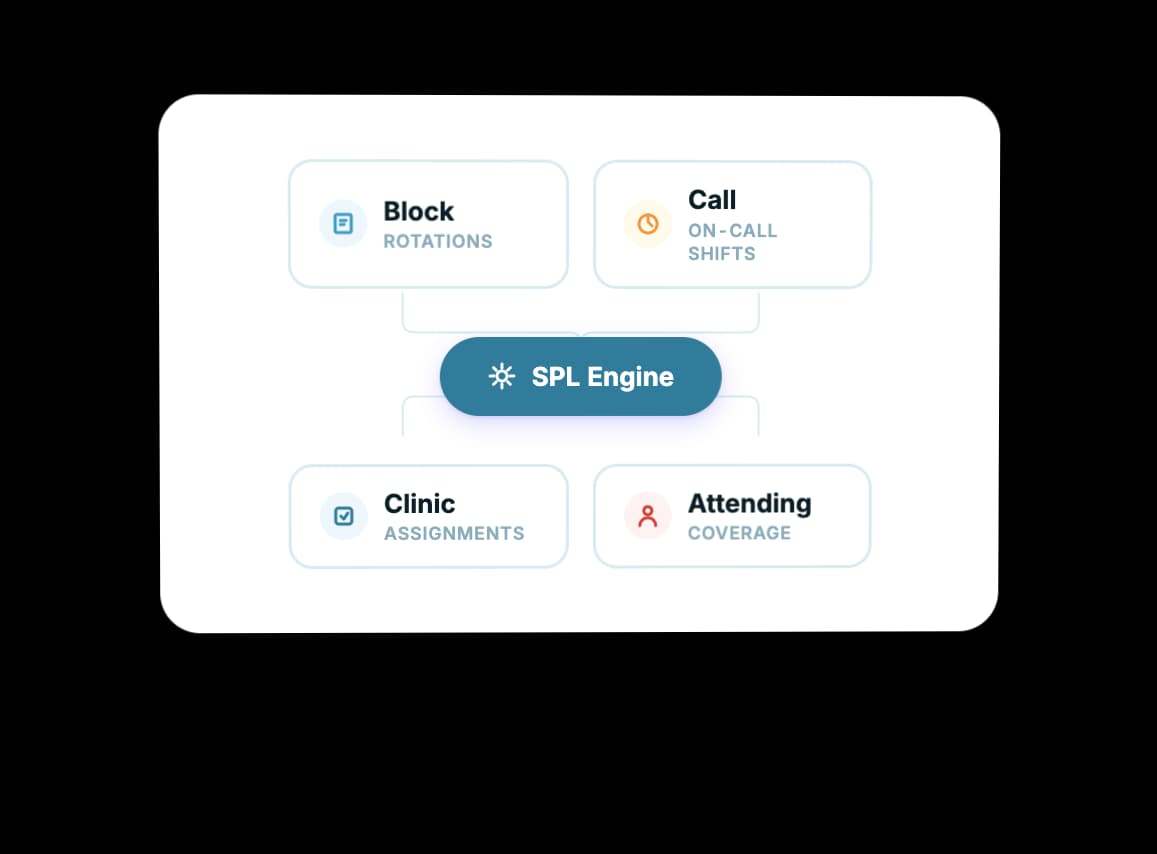
Call, block, and clinic schedules are optimized simultaneously as one system. A change in call coverage does not cascade into rotation conflicts, eliminating the domino effect that makes equitable scheduling so difficult.
- Simultaneous multi-schedule optimization
- No domino effect from changes
- Coverage and rotation alignment enforced
Frequently Asked Questions
Ready for a Truly Equitable Call Schedule?
See what a mathematically equitable call schedule looks like for your program.
Schedule a Consultation