
Healthcare Scheduling Optimization End the Domino Effect
Thrawn's mathematical optimization engine unifies block, call, clinic, and attending schedules into one interconnected system — so a single change never cascades into chaos.
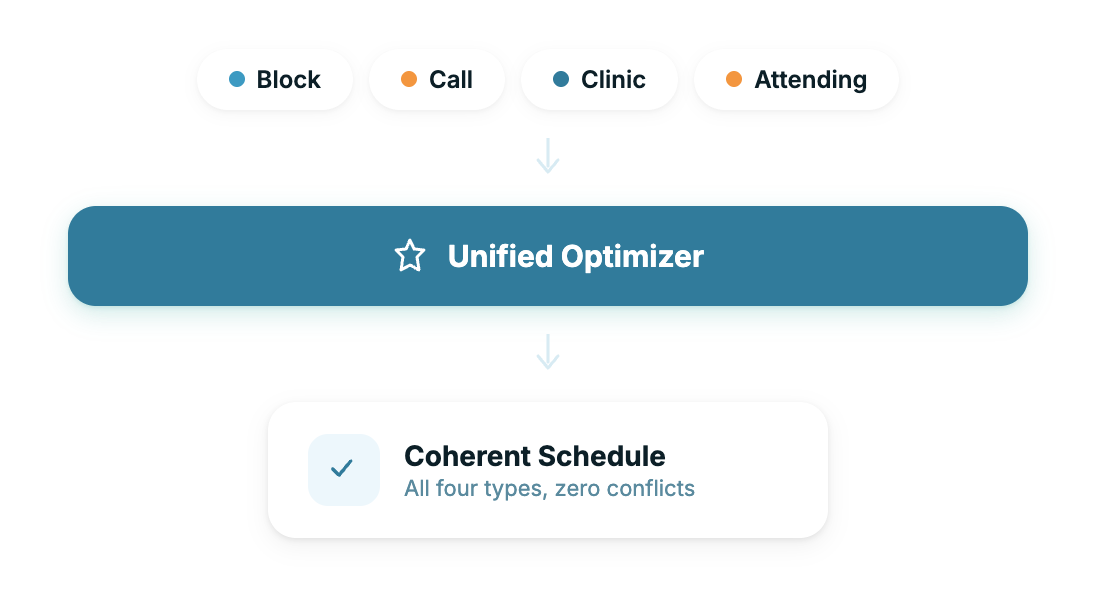
Why Multi-Schedule Coordination Always Breaks
Most residency and fellowship programs maintain three or four separate schedules — block, call, clinic, and attending — each living in its own spreadsheet or standalone tool. On paper, they coexist. In practice, they collide constantly. Adjust a resident's block rotation, and the call schedule loses coverage. Shift a clinic day, and a duty hour limit quietly breaks. Each schedule was built in isolation, so every change becomes a manual reconciliation exercise across all of them. Rule-based scheduling tools can flag individual conflicts, but they have no shared model of how the schedules relate. The cross-schedule coordination burden falls entirely on the chief resident or program director — every single time.
Why Multi-Schedule Coordination Always Breaks
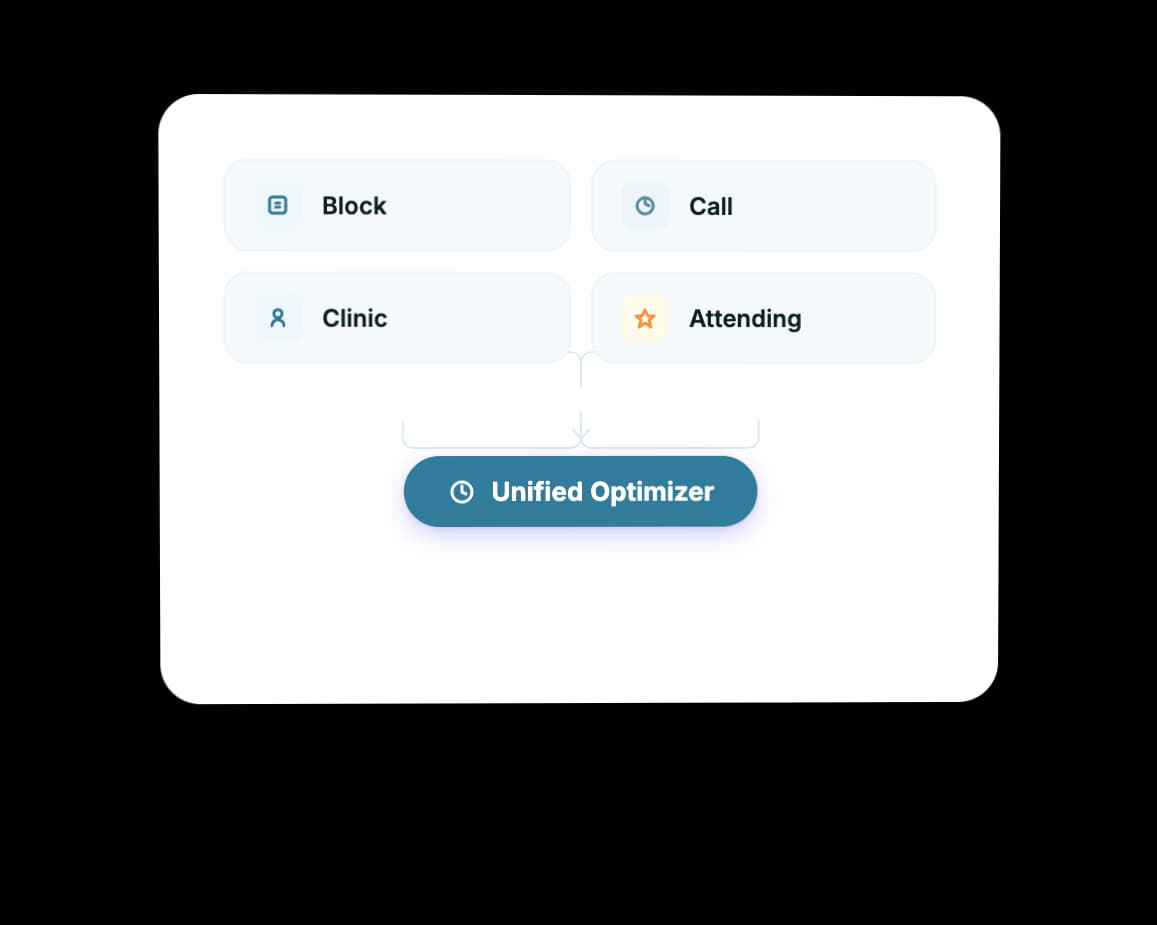
UNIFIED OPTIMIZATION
All Four Schedules Optimized Simultaneously
Thrawn's optimization engine treats block, call, clinic, and attending schedules as a single interconnected optimization problem — not four separate outputs. Constraints across all schedule types are resolved together, in one mathematical pass.
- Block and call resolved together
- Clinic integrated at generation time
- Attending coverage factored in simultaneously
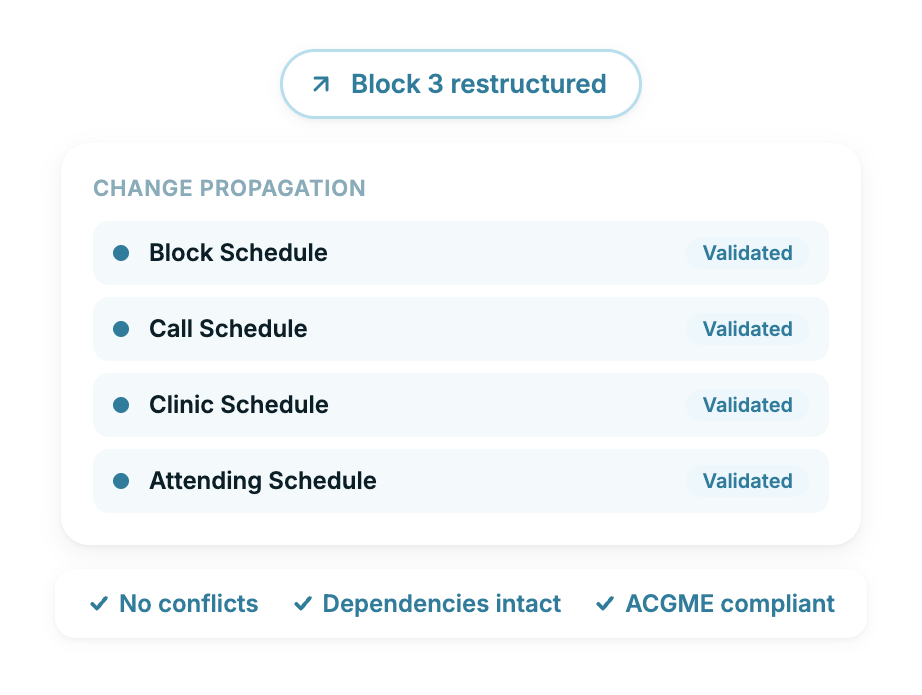
DOMINO EFFECT ELIMINATED
One Change Won't Break Everything
Because all schedules share a single optimization model, a modification to one does not silently invalidate the others. The system understands cross-schedule dependencies and preserves them — no cascading conflicts, no manual re-auditing.
- Cross-schedule dependencies encoded as constraints
- No silent downstream conflicts
- Changes validated across all schedules instantly
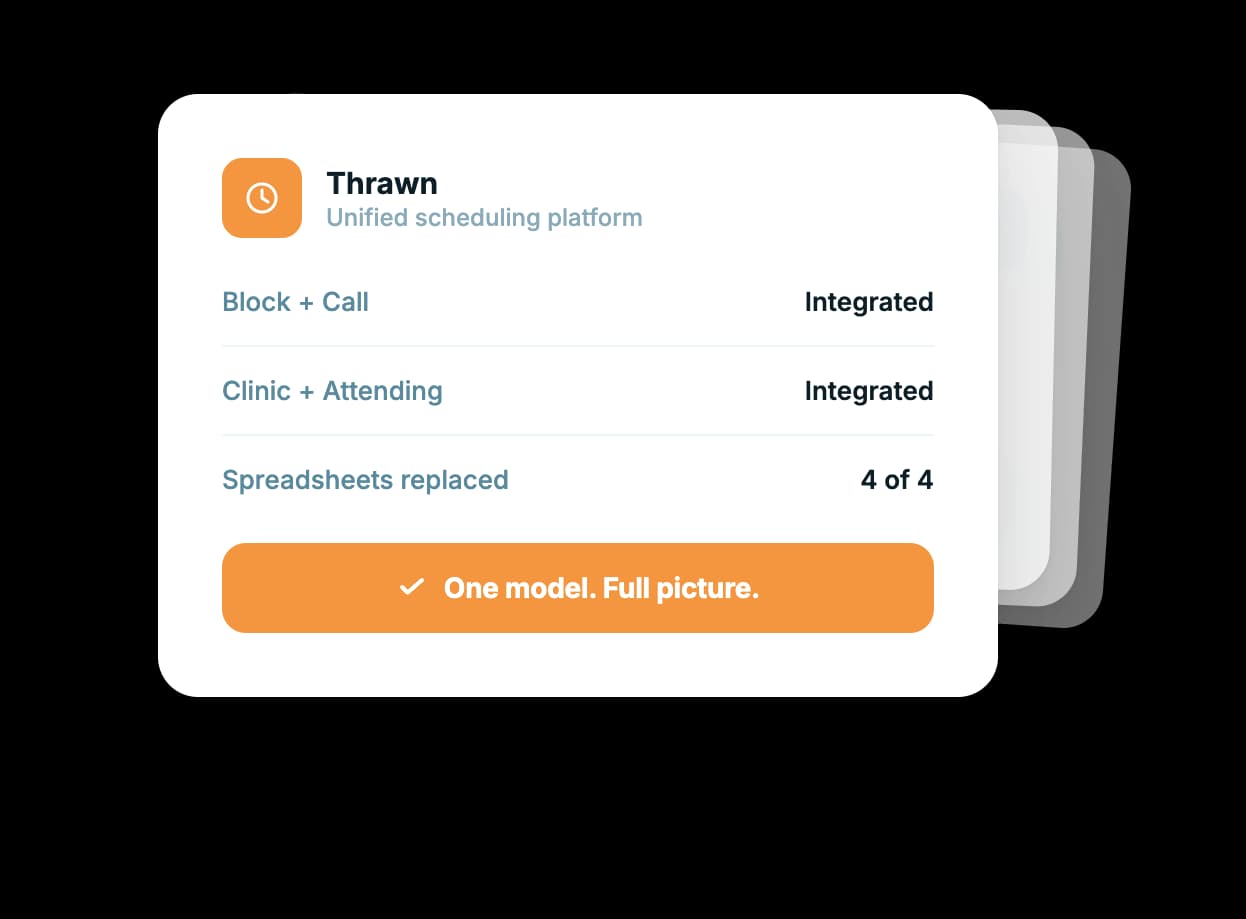
SINGLE ENGINE APPROACH
One System Versus Four Separate Tools
Using separate tools for each schedule type means no tool has visibility into the others. Thrawn replaces that fragmented stack with a single optimization engine that holds the full scheduling picture — eliminating the coordination layer entirely.
- No inter-tool reconciliation required
- Full scheduling picture in one model
- Replaces fragmented spreadsheet stacks
SAFE CHANGE PROPAGATION
Modifications Flow Safely Across Schedules
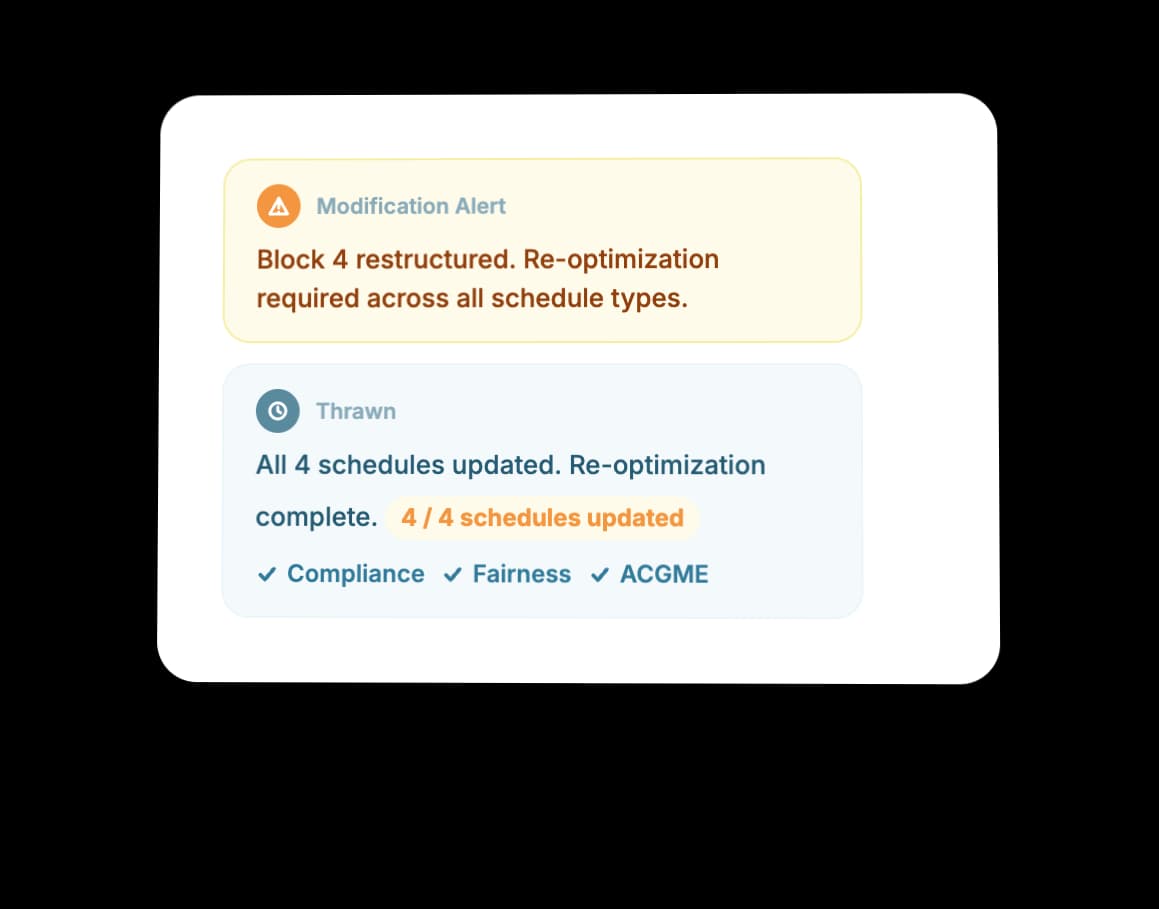
When unplanned absences, vacation requests, or program changes require a modification, Thrawn re-optimizes across all affected schedules simultaneously — preserving ACGME compliance, coverage requirements, and fairness throughout the adjustment.
- Re-optimization spans all schedule types
- ACGME compliance preserved on every change
- Fairness and coverage maintained throughout
Unify Your Scheduling
Send your constraints and receive unified, optimized schedules across every schedule type.
See How It Works