
Residency Scheduling Software Powered by Mathematical Optimization
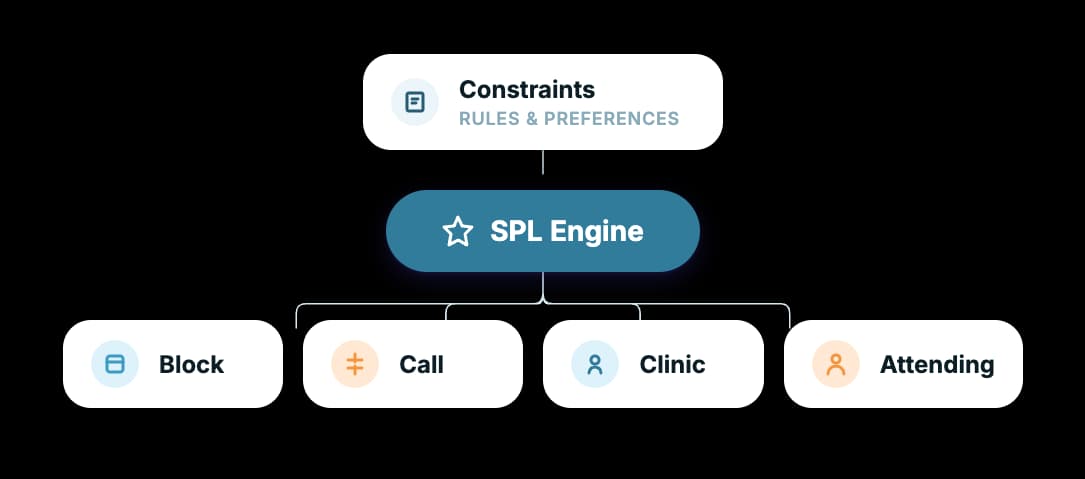
Thrawn's managed service delivers complete, ACGME-compliant Block, Call, Clinic, and Attending schedules from your program's constraints. Chief residents review finished schedules instead of building them.
Why Physician Scheduling Is Still Broken
Residency scheduling sits at the intersection of competing demands: ACGME duty hour rules, educational rotation requirements, resident preferences, coverage obligations, and fairness expectations that span an entire academic year. Most programs solve this with spreadsheets, patchwork tools, or rule-based software that flags conflicts after the schedule is already half-built. Chiefs spend hundreds of hours manually resolving cascading errors. Every adjustment risks breaking something else. Even when a schedule ships, compliance is assumed, not guaranteed. And when the chief graduates, institutional scheduling knowledge disappears with them. The problem isn't effort — it's that no existing tool was architecturally designed to solve all of this at once.
Why Physician Scheduling Is Still Broken

THE OPTIMIZATION ENGINE
The optimization engine: Scheduling Built on Math
Thrawn's optimization engine is a domain-specific solver rooted in mathematical programming and operations research. It produces complete, optimal schedules from constraints — not rule-based suggestions requiring human resolution. Every competitor would need to rebuild their engine from the ground up to replicate this approach.
- Complete schedules from constraints
- No manual conflict resolution needed
- Built specifically for graduate medical education
DONE FOR YOU
Constraint In. Finished Schedule Out.
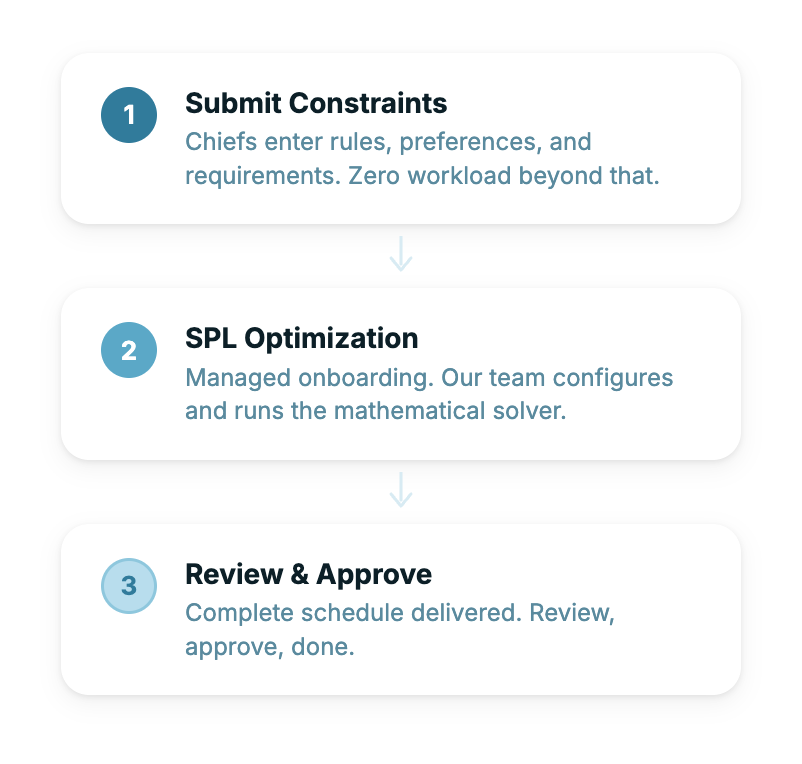
Thrawn operates as a fully managed service. Programs send their constraints — resident preferences, rotation requirements, ACGME duty hour rules, vacation requests, and educational goals — and receive finished Block, Call, Clinic, and Attending schedules ready for review. Chiefs become reviewers, not builders.
- Zero scheduling workload for chiefs
- Managed onboarding per program
- Review and approve, not build
CROSS-SCHEDULE COORDINATION
One Change Won't Break Everything
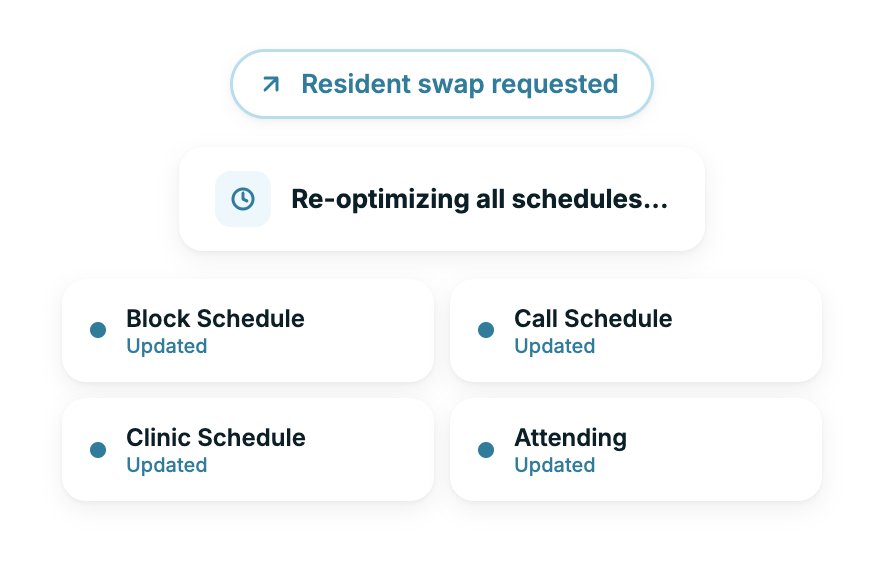
Most programs build Block, Call, Clinic, and Attending schedules in sequence — so a change to one cascades into the others. Thrawn's optimization engine builds all four simultaneously as a single interconnected system, eliminating the domino effect entirely. See how this works for [internal medicine programs](/uses/residency-scheduling-for-internal-medicine).
- All four schedules treated as one
- Domino effect eliminated by design
- Safe mid-year re-optimization
ACGME COMPLIANCE BUILT IN
Violations Prevented at Generation Time
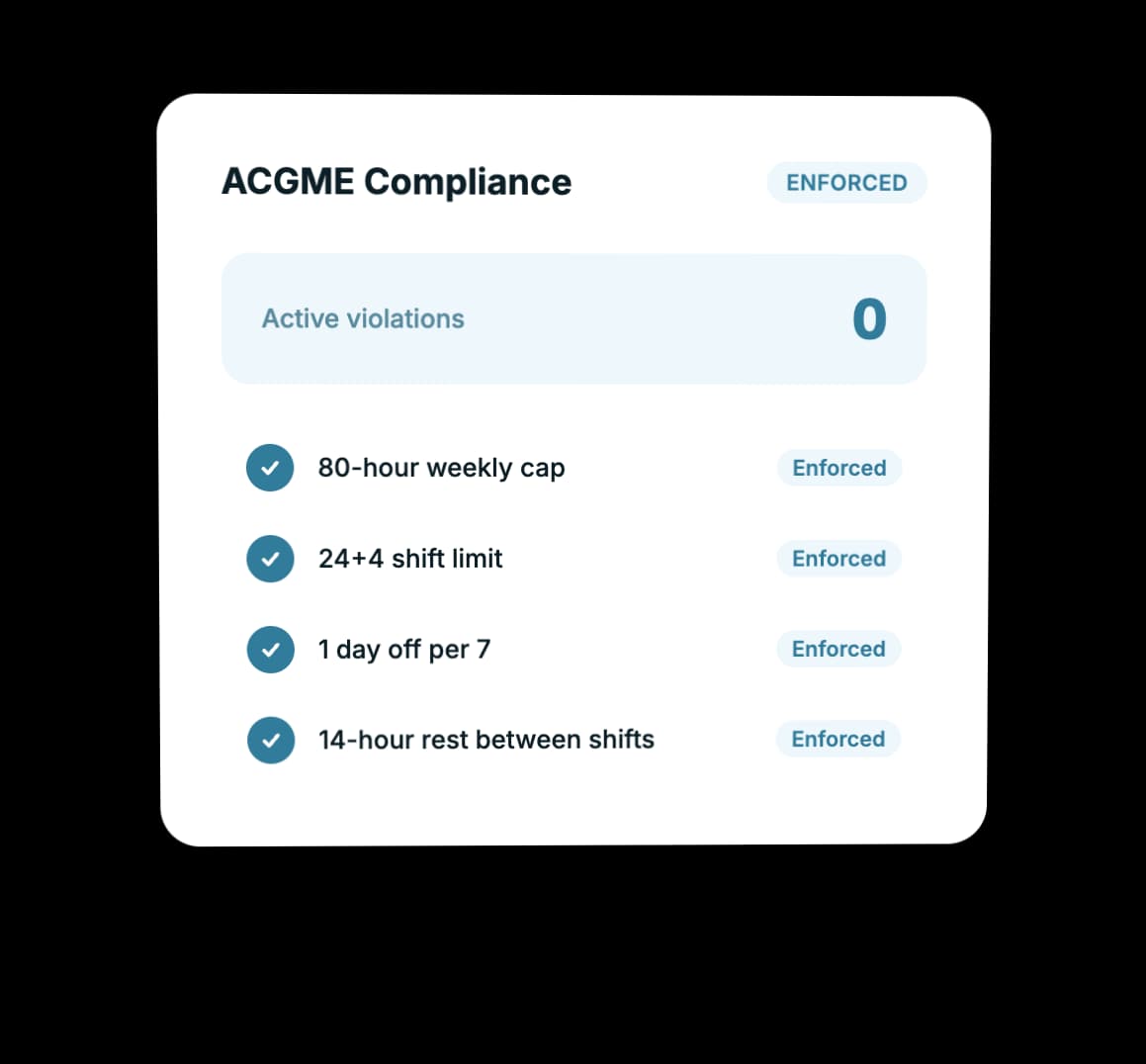
ACGME duty hour rules are encoded as hard mathematical constraints inside the optimization engine — not post-hoc audit checks. Every schedule Thrawn delivers satisfies the 80-hour weekly cap, continuous duty limits, and mandatory rest requirements by construction, before it ever reaches the program for review.
- 80-hour weekly cap enforced
- Violations prevented, not detected
- Compliance survives every change
BEYOND SCHEDULING
Expanding Into Care Coordination
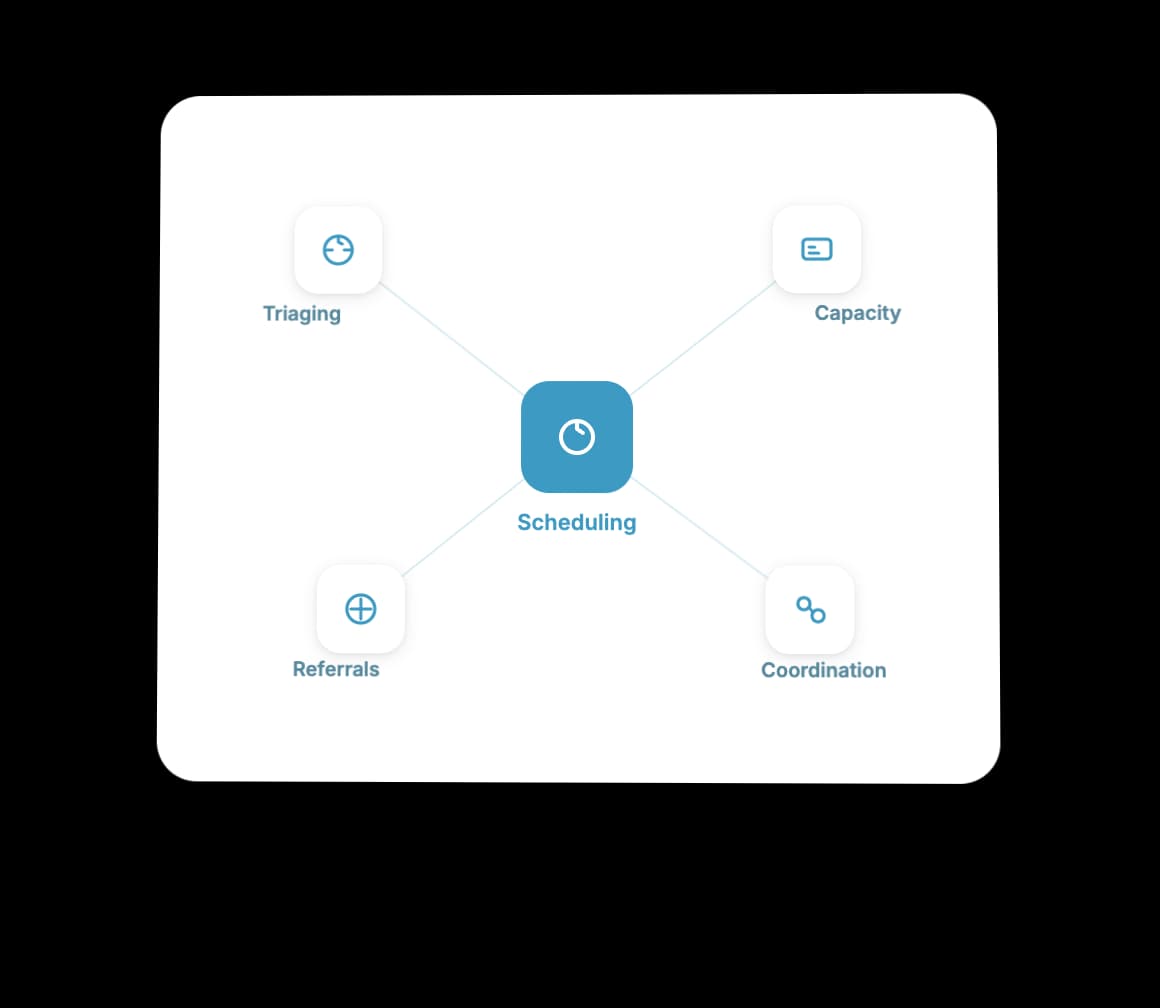
Thrawn is extending its optimization engine from residency scheduling into clinical care coordination — automating patient triaging, referral-to-appointment pipelines, and provider capacity management.
- Automated patient triaging
- Provider capacity tracking
- Referral-to-appointment optimization
See Optimized Scheduling in Action
Send your constraints, get back a finished, ACGME-compliant schedule.
See How It Works