
Clinical Rotation Scheduling Software That Tracks Graduation Requirements
Thrawn's managed service encodes every graduation requirement directly into the schedule — minimum weeks per specialty, PGY-level rules, and multi-track constraints — so gaps surface before they happen, not after.
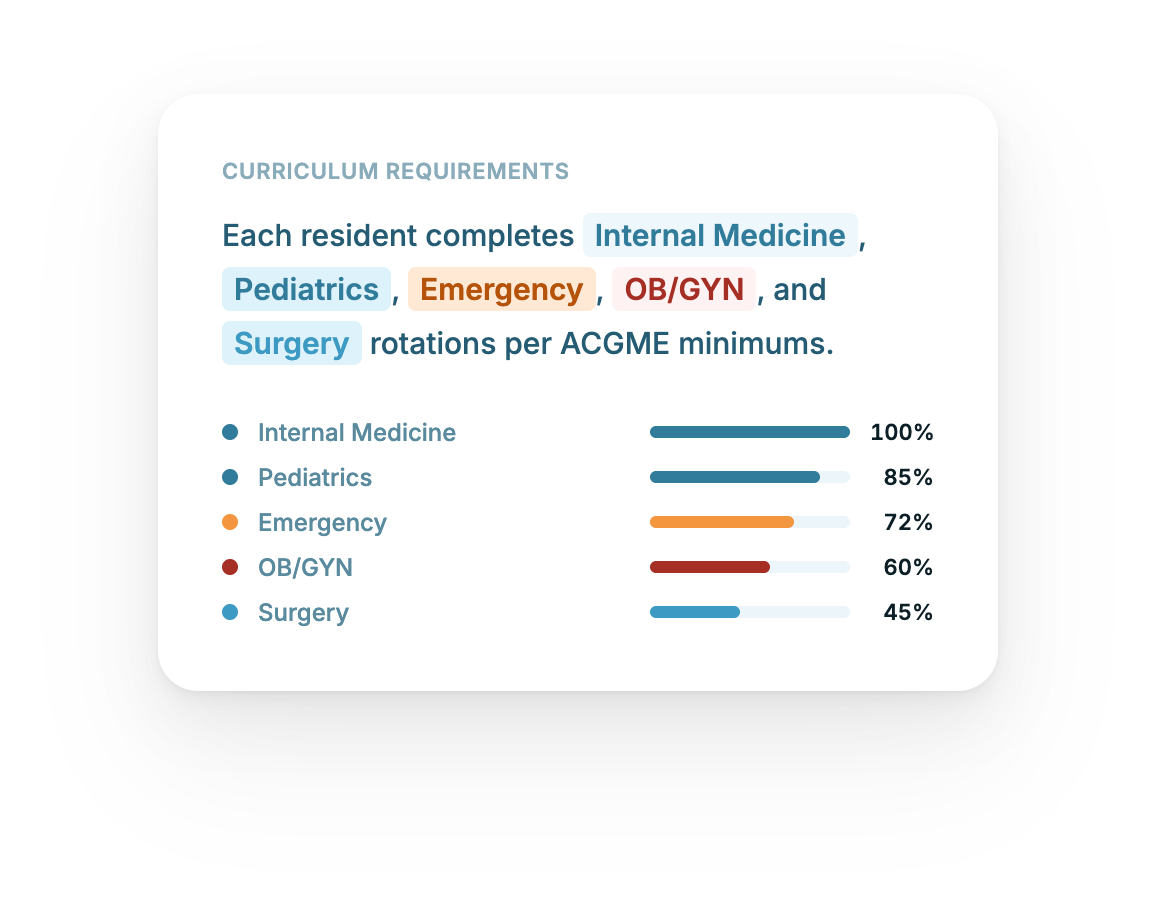
Why Graduation Requirements Fall Through the Cracks
Every residency program must ensure each resident meets a specific set of graduation requirements — minimum weeks in required specialties, mandatory experiences at each PGY level, and distinct curriculum targets for separate tracks. Most programs track these requirements in spreadsheets running parallel to the actual schedule: one file for the rotation calendar, another for requirement progress. When a rotation changes, nobody updates the tracker. When a resident switches tracks, the spreadsheet breaks. By the time the gap is discovered — often late in the academic year — there are no blocks left to reallocate. Rule-based scheduling tools flag conflicts after the schedule is built, but they don't model educational requirements as constraints. The result is a scheduling process that carries silent graduation risk from day one.
Why Graduation Requirements Fall Through the Cracks
CURRICULUM SATISFACTION
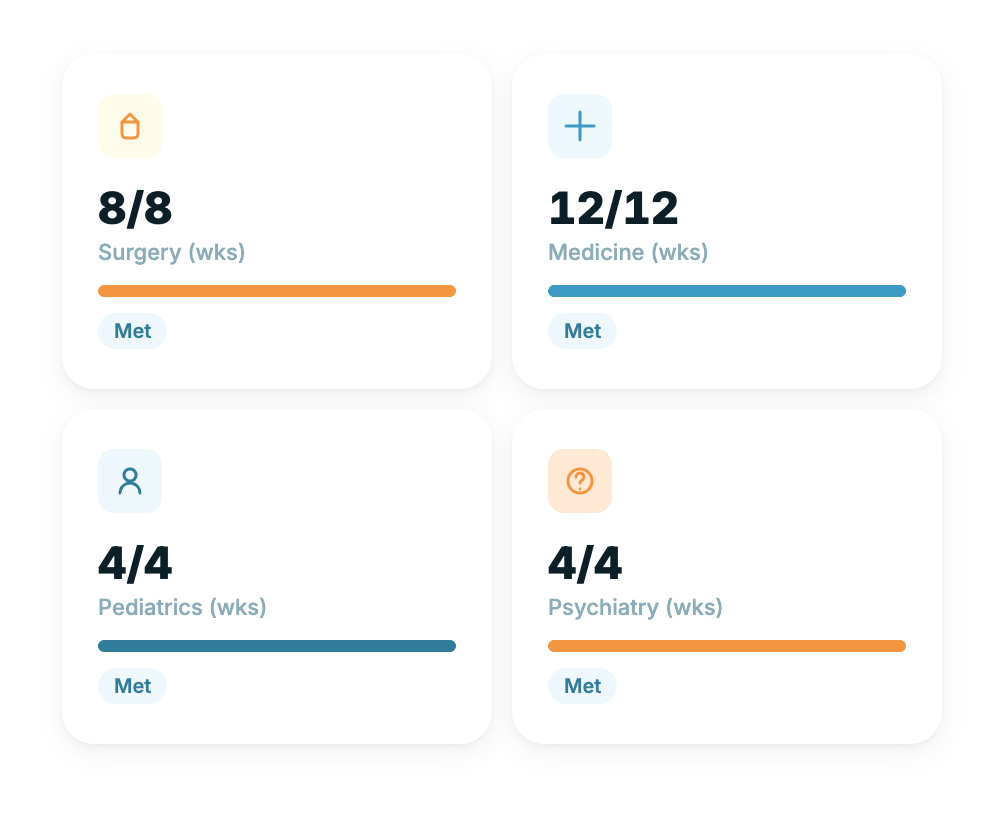
Minimum Weeks Per Specialty Enforced
Thrawn's optimization engine encodes specialty minimums as hard constraints — not a post-build checklist. Every generated schedule enforces each resident's required weeks per specialty before the academic year closes. See how this works for [residency program coordinators](/uses/scheduling-for-program-coordinators).
- Specialty minimums as hard constraints
- No manual tracking spreadsheets
- Coverage gaps prevented at generation
GRADUATION REQUIREMENT TRACKING
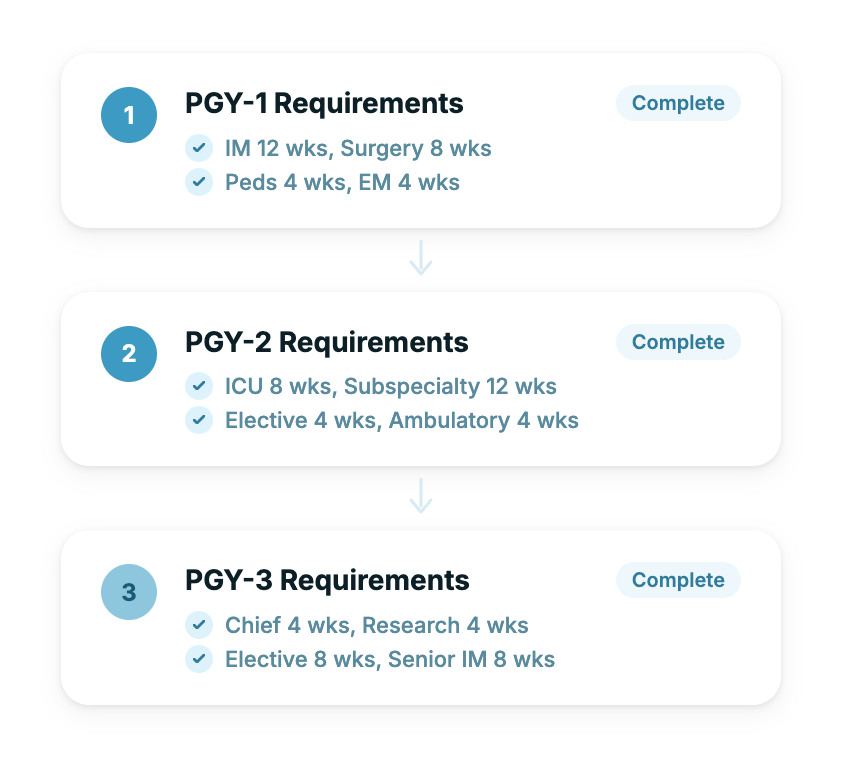
PGY-Level Progress Built Into Scheduling
Graduation requirements differ by PGY level — and Thrawn tracks them simultaneously across the full academic year. Required experiences, milestone rotations, and level-specific rules are encoded into the optimization engine, so every resident's path to graduation is tracked as a hard constraint from block one.
- PGY-specific requirement encoding
- Full-year graduation path modeled
- Real-time constraint satisfaction
MULTI-TRACK SUPPORT
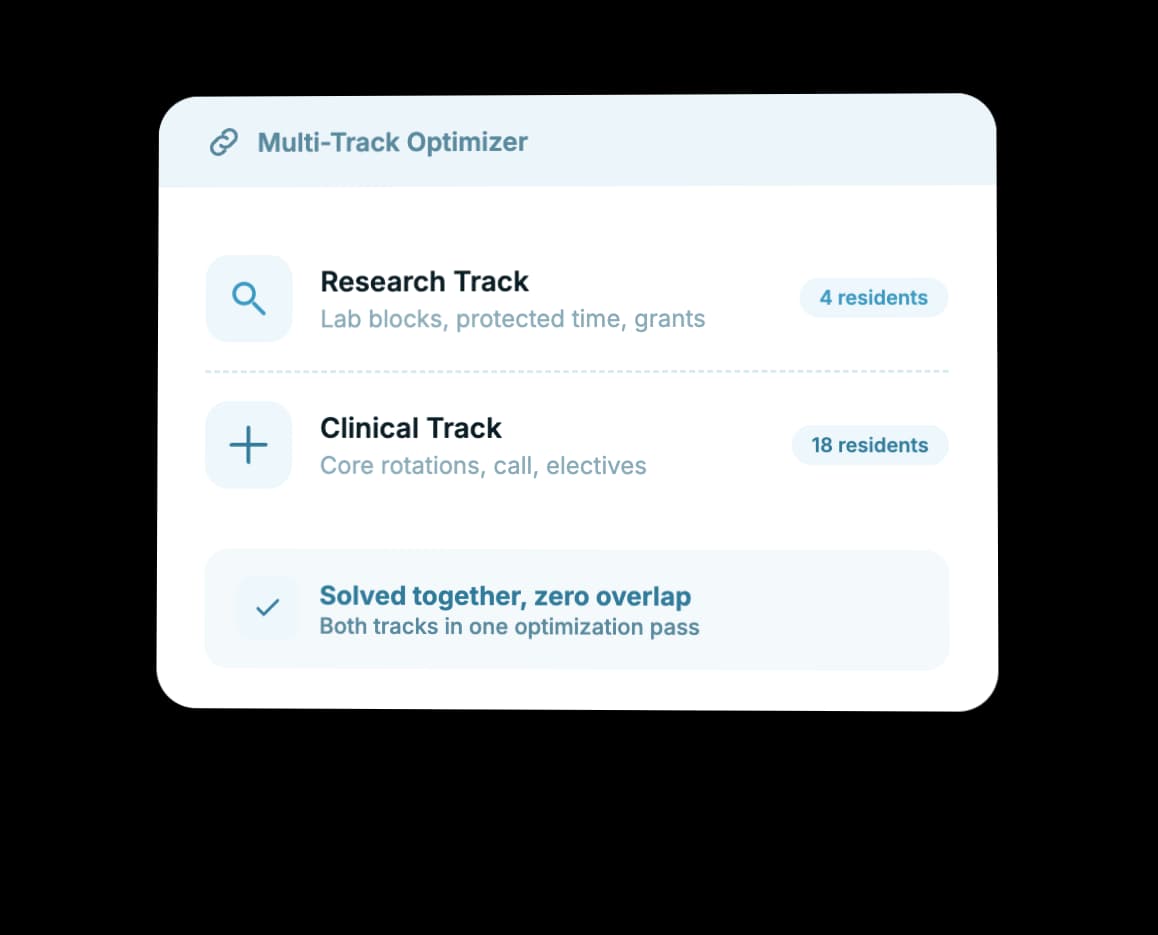
Research and Clinical Tracks Scheduled Together
Research track and clinical track residents operate under different curriculum targets — Thrawn handles both simultaneously within a single optimization. Track-specific rotation requirements are encoded as separate constraint sets, eliminating the manual effort of maintaining parallel schedules for divergent pathways.
- Separate constraint sets per track
- Simultaneous multi-track optimization
- No parallel spreadsheets needed
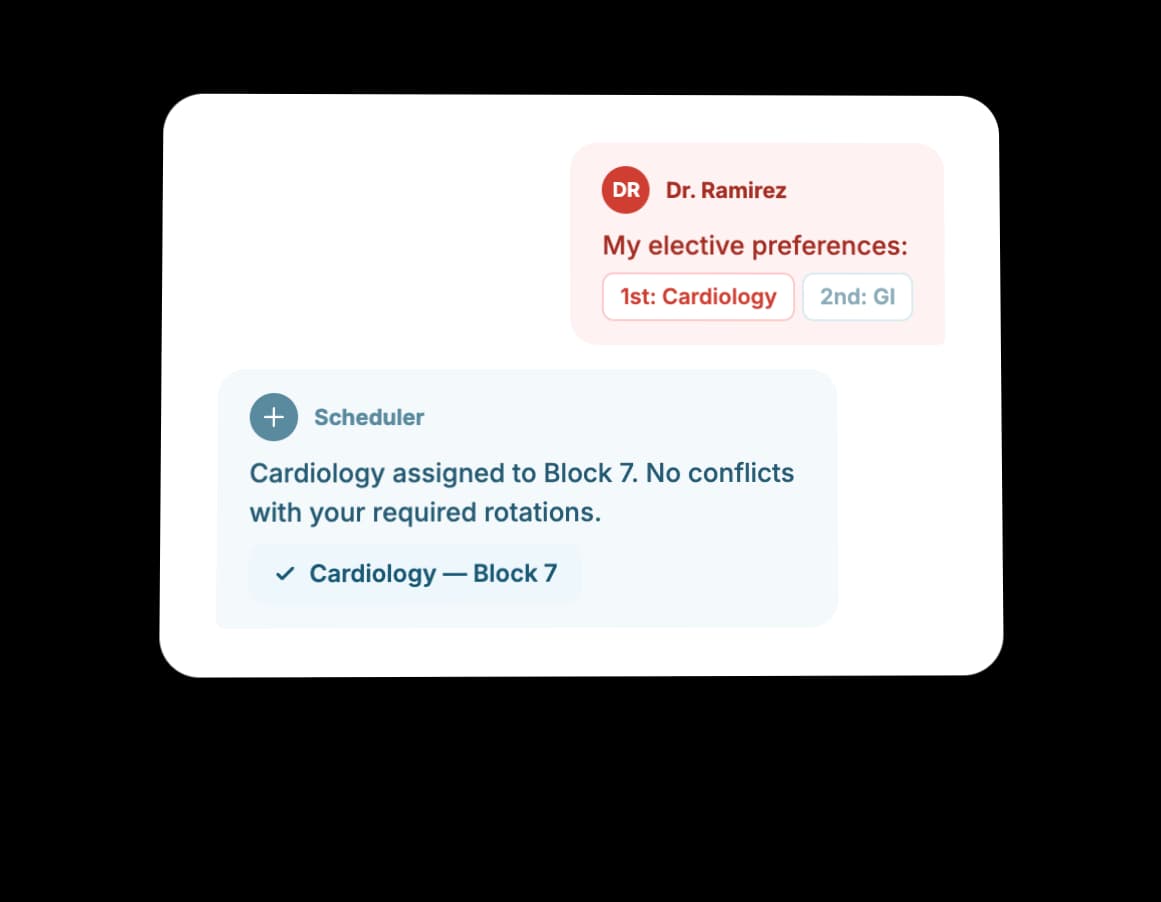
ELECTIVE PREFERENCE INTEGRATION
Elective Rotations Scheduled With Resident Input
Elective blocks must satisfy resident preferences while still fitting within the remaining curriculum space. Thrawn integrates elective preferences directly into the optimization, balancing individual requests against program-wide availability and ensuring electives don't displace required rotation time. Learn more about how [program coordinators](/uses/scheduling-for-program-coordinators) use this capability.
- Resident elective preferences encoded
- Required rotation space preserved
- Conflict-free elective placement
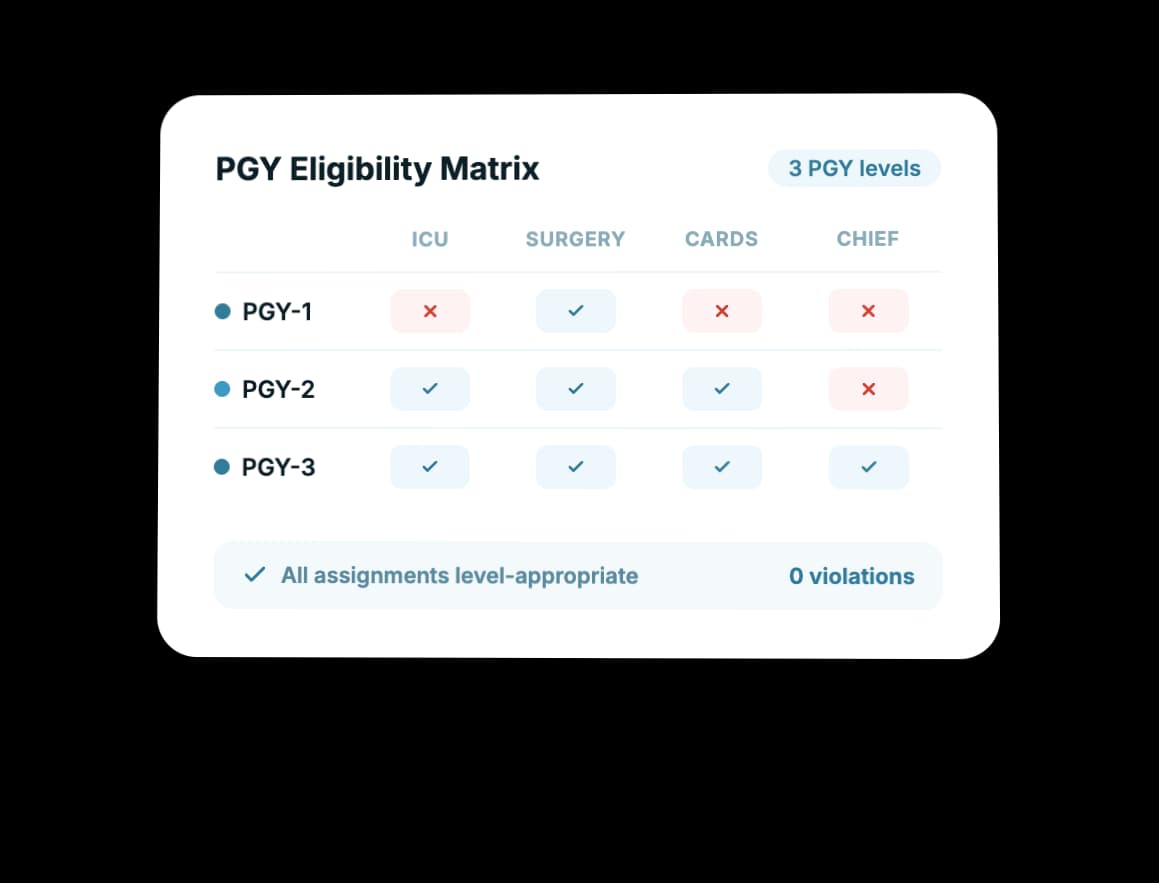
ASSIGNMENT APPROPRIATENESS
PGY-Level Rules Enforced Across Every Block
Certain rotations are only appropriate for residents at specific PGY levels — and misassignment creates both educational and accreditation risk. Thrawn enforces PGY-level assignment rules as hard mathematical constraints, so no resident is placed in a rotation they are not yet eligible for.
- PGY eligibility rules enforced
- Accreditation risk eliminated
- Level-appropriate assignment enforced
Track Rotations Automatically
Thrawn delivers schedules where every graduation requirement is met by construction — not by manual audit.
See How It Works